

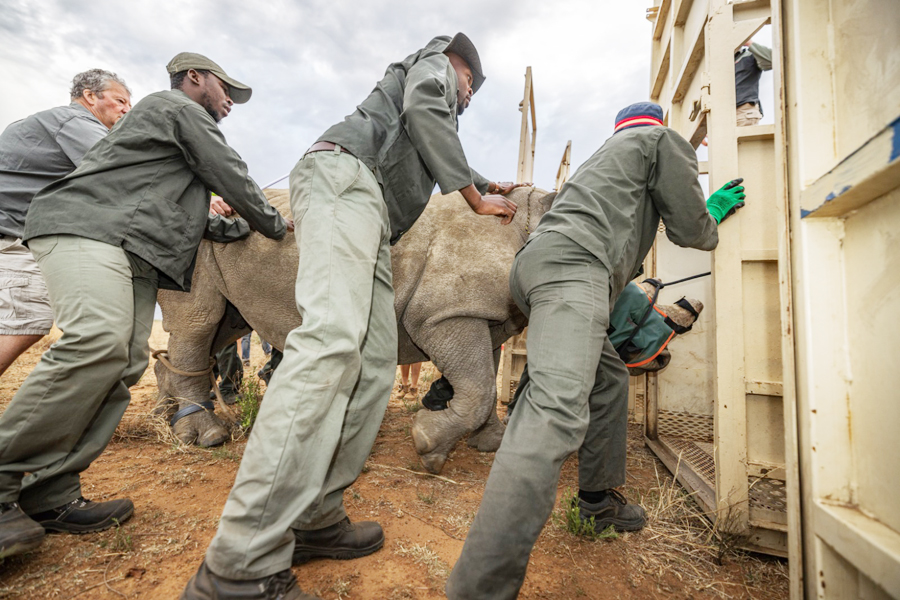
Rwanda has completed the successful translocation of 70 southern white rhinos to Akagera National Park in a landmark conservation project executed by African Parks in partnership with the Rwanda Development Board (RDB).
The move, which unfolded in two phases of 35 animals each, is part of the broader “Rhino Rewild” initiative aimed at restoring viable rhino populations across Africa.
The rhinos were moved more than 3,400 km from South Africa to Rwanda, in what African Parks describes as the most ambitious operation of its kind to date.
The effort was funded by The Howard G. Buffett Foundation, with logistical support from multiple conservation organisations and veterinary teams who monitored the animals throughout the complex, multi-day journey.
Jean-Guy Afrika, CEO of the Rwanda Development Board, called the translocation “a historic milestone” for Rwanda, underscoring the country’s commitment to environmental protection and conservation-driven tourism.
“Our commitment to protecting endangered species is closely tied to our vision for sustainable tourism, where thriving wildlife and well-managed protected areas like Akagera create long-term value for both visitors and communities,” Afrika said.
Akagera National Park has become a model for wildlife reintroduction in Central Africa. Over the past decade, Rwanda has successfully reintroduced lions, black rhinos, and now, a second wave of white rhinos, making the park home to Africa’s iconic “Big Five.”
The initial 2021 introduction of 30 white rhinos into Akagera has already seen growth, with the population increasing to 41 prior to the new arrivals.
The newly arrived rhinos are expected to form a crucial “meta-population” that will help secure the species' future across Africa.
With white rhinos under increasing pressure from poaching and habitat loss, initiatives like this are vital to their survival.
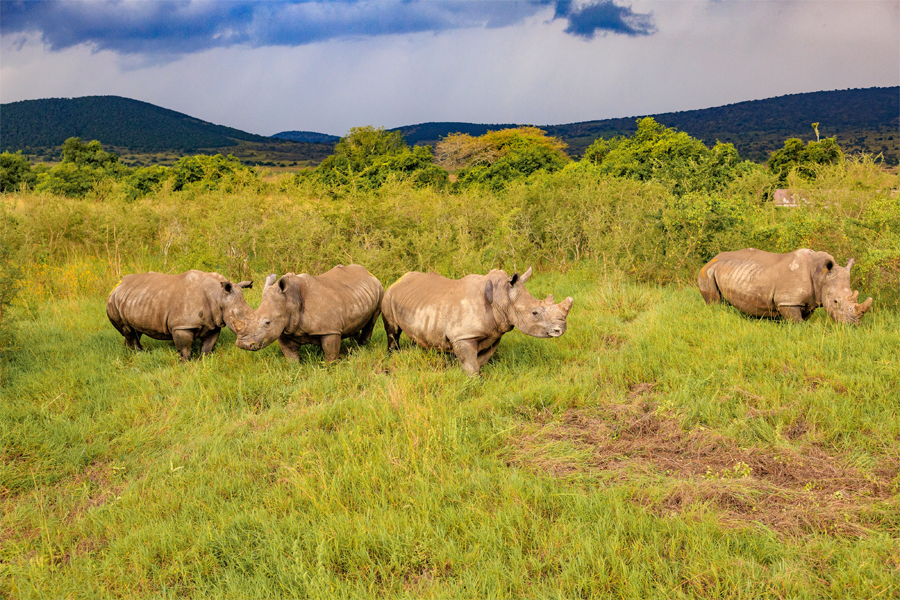
To help the animals acclimatise, the rhinos were first moved within South Africa to the Munywana Conservancy, where they were exposed to environments and diseases similar to those in Rwanda.
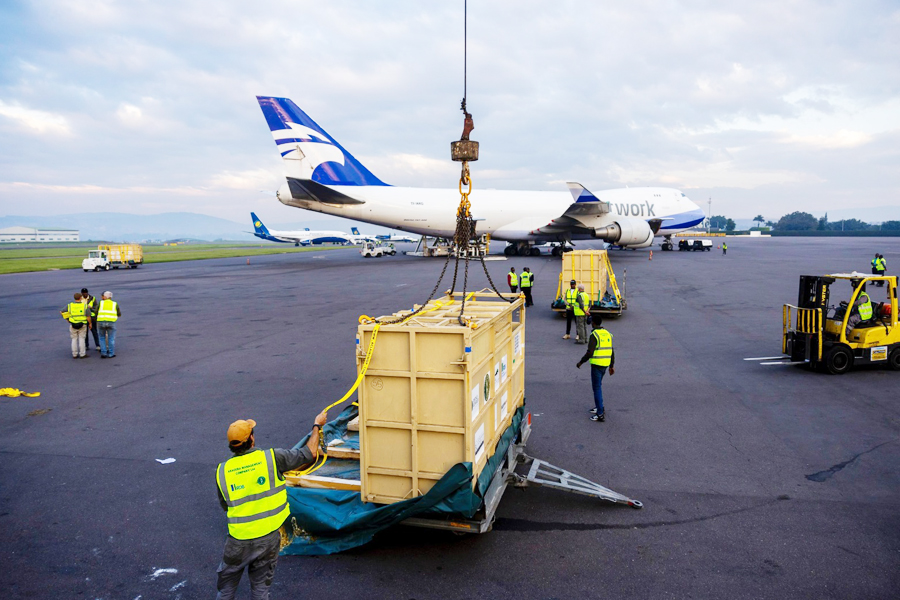
They were then transported in individual steel crates to Durban’s King Shaka International Airport, flown to Kigali on a Boeing 747, and finally driven to Akagera.
The entire operation, including preconditioning, spanned several months and required tight coordination among international and local experts.
Peter Fearnhead, CEO of African Parks, said the safe delivery of all 70 animals marks only the beginning of a long-term conservation challenge.
“There are numerous risks that still remain, but with the dedicated Akagera park management team and intensive monitoring, these rhinos have a real opportunity to thrive,” he said.
Dale Wepener, conservation manager of the Munywana Conservancy, praised the partnership, stating that such collaborations are “increasingly important in ensuring the survival of these special and threatened animals.”
The reintroduction of rhinos is not only a conservation milestone but also a strategic boost to Rwanda’s ecotourism ambitions. Akagera’s transformation—driven by its partnership with African Parks since 2010—has turned the once-depleted reserve into a thriving wildlife haven.
With white rhinos, lions, elephants, and leopards now roaming its vast savannahs and wetlands, the park is positioned as a premier destination for high-value nature tourism in East Africa.
According to RDB, the continued expansion of Akagera’s animal populations is expected to increase local employment, attract more visitors, and foster greater investment in Rwanda’s protected areas—all while contributing to the long-term survival of Africa’s iconic species.
The rhinos will be closely monitored in the coming weeks by a dedicated veterinary team to ensure a smooth transition into their new habitat.
For Rwanda, this operation is not just about saving a species—it’s about leading by example in a continent-wide effort to rebuild what has been lost and create a more resilient ecological future.